
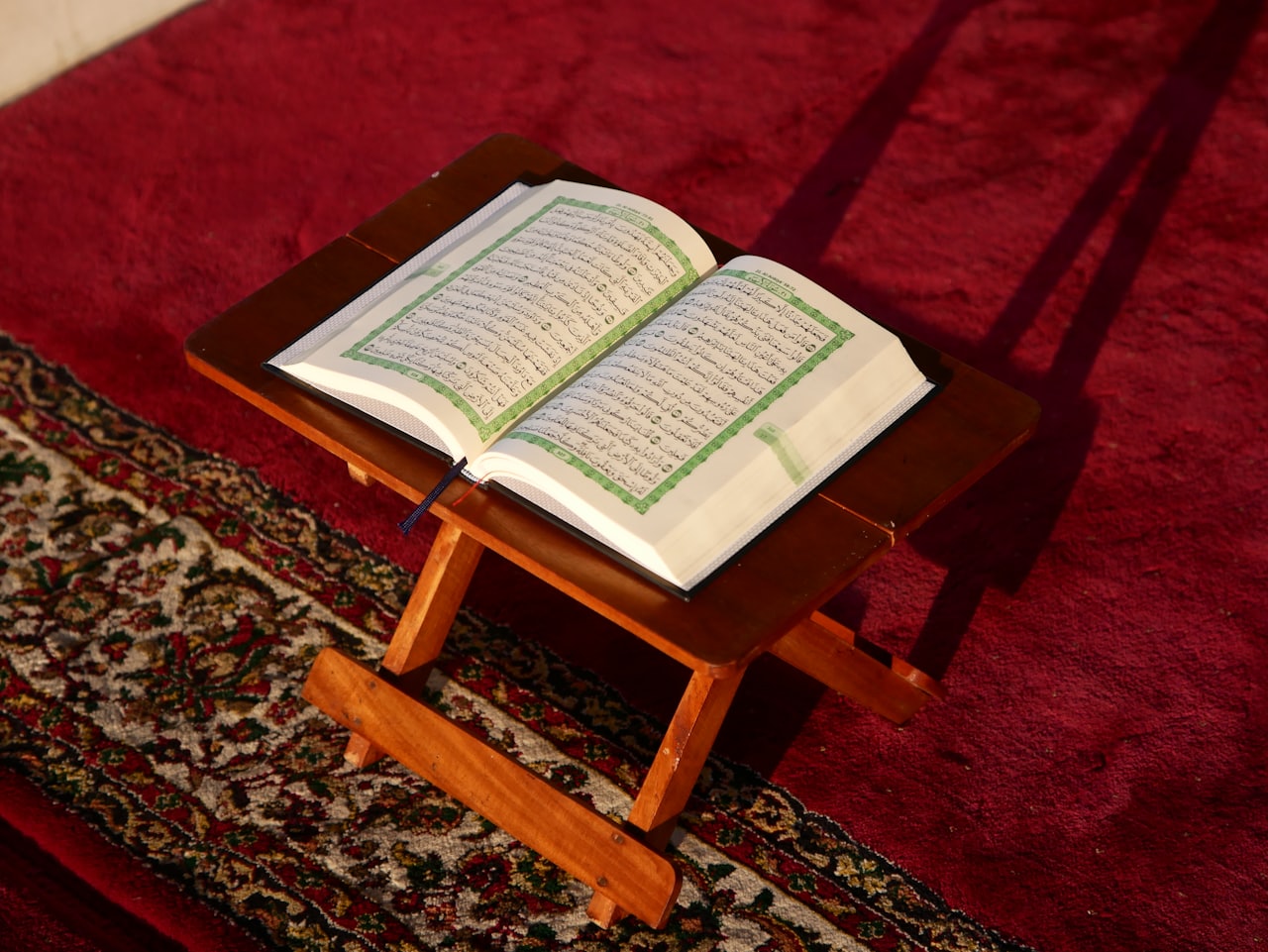
Discover the Beautiful Teachings of Islam
The mission of our platform is to spread the message of
Islam. There is no God but Allah and Muhammad (pbuh) is the final prophet and messenger of Allah to all nations.
All prophets chosen by Allah, including Abraham, Jesus, David, Joseph, Moses etc, to deliver the message: There is no God but Allah.
The first revelation occurred in 610 CE, when prophet Muhammad (pbuh), at the age of 40, was meditating in the Cave of Hira near Mecca. The angel Gabriel appeared to him and commanded him to “Read!” or “Recite,” marking the beginning of his prophetic mission and the start of the Quranic revelations. The Qur’an today is exactly the same as when it was first revealed over 1400 years ago. (Miracle of Allah).
Please view and subscribe to our YouTube channel: @islamicinvite
Thank You,
Mr. Khan
ISLAMIC INVITE (Founder)
Our website is currently under construction and accessible.
Explore Inspiring Teachings of Islam
This platform offers informative videos and articles designed to provide a welcoming space for education and community engagement.
Informative Videos
Watch engaging videos explaining Islamic teachings.
Detailed Articles
Read thoughtful articles on faith and community.

Community Space
Connect with others in a welcoming environment.
Explore Inspiring Islamic Teachings and Articles
Find helpful answers to common questions about our platform, resources, and community programs.
We offer informative videos and articles sharing the teachings of Islam.
You can easily engage with our welcoming space by exploring our online platform.
Yes, all our videos and articles are freely accessible to everyone.
We regularly update our platform with fresh educational materials.
It is designed for anyone seeking to learn more about Islam in a friendly environment.
We provide engaging videos and articles focused on Islamic education.
Content Editor
Mr Khan oversees our educational articles and video content, ensuring all teachings are shared accurately and warmly. He helps create a welcoming online environment for our growing community.
Join Our Welcoming Community Today
This section highlights key resources designed to support Islamic education and community engagement.

Informative Videos
This topic covers essential teachings to enhance your understanding of Islam.

Engaging Articles
This topic delves into insightful articles and community discussions.
Community Space
Explore this topic for welcoming education and shared insights.
Blog
Explore our collection of informative articles and insights designed to educate, inspire, and engage our community.
The Five Pillars of Islam: The Foundation of Muslim Life
Islam is built upon five core acts of worship and obedience that serve as the framework for a Muslim's daily life, spiritual growth, and relationship with God (Allah). Known as the Five Pillars of Islam (Arkan al-Islam), these practices are mandatory for all able-bodied and mature Muslims. Derived from famous sayings of the Prophet Muhammad (pbuh), they unite the global Muslim community in shared devotion and purpose.

1. Shahada: The Declaration of Faith.
The first pillar is the Shahada, the sincere recitation of the Islamic creed: "There is no god but Allah, and prophet Muhammad (pbuh)is His messenger. This simple yet profound statement is the foundation of all other Islamic beliefs. To become a Muslim, one must state this declaration with full understanding and heartfelt conviction. It emphasizes the absolute oneness of Islam (Tawhid) and acknowledges Muhammad (pbuh) as the final prophet.

2. Salah: Ritual Prayer
Muslims are required to perform ritual prayers five times a day: at dawn, noon, mid-afternoon, sunset, and night. Salah serves as a direct, personal link between the worshipper and God. Before praying, Muslims perform ritual washing (wudu) to ensure physical and spiritual cleanliness. The prayers involve specific physical postures—standing, bowing, prostrating, and sitting—accompanied by recitations from the Quran in Arabic. This regular routine keeps believers mindful of God throughout their busy days.

3. Zakat: Almsgiving
Zakat is the practice of charitable giving based on accumulated wealth. Unlike voluntary charity (sadaqah), Zakat is a mandatory obligation for Muslims who meet a specific threshold of wealth (nisab). Generally set at 2.5% of a person's annual savings and liquid assets, Zakat is used to help the poor, needy, orphans, and travelers, as well as to support community welfare. The word itself means "to purify" or "to cleanse," signifying that wealth is purified by setting aside a portion for those in need.

4. Sawm: Fasting during Ramadan
Sawm refers to fasting during the holy month of Ramadan, the ninth month of the Islamic lunar calendar. From dawn until sunset, healthy adult Muslims abstain from food, drink, sexual activity, and smoking. Fasting is designed to cultivate self-discipline, empathy for the less fortunate, spiritual focus, and gratitude for God's blessings. The month concludes with one of Islam's major holidays, Eid al-Fitr, the Festival of Breaking the Fast.

5. Hajj: Pilgrimage to Mecca
The final pillar is the Hajj, the annual pilgrimage to the holy city of Mecca in Saudi Arabia. Every physically and financially able Muslim is obligated to undertake this journey at least once in their lifetime. Taking place during the twelfth month of the Islamic calendar (Dhu al-Hijjah), the Hajj retraces the steps of the prophets Abraham, Ishmael, and Muhammad. Millions of pilgrims gather from all over the world, dressed in simple white garments, symbolizing human equality and unity before God

Conclusion
The Five Pillars of Islam are more than just rituals; they are a comprehensive way of life that integrates faith, action, community, and social justice. Together, they shape the identity of a Muslim and provide a clear path toward spiritual fulfillment and closeness to the Creator.
Understanding the Holy Qur’an: The Timeless Guidance for Humanity
The Holy Qur'an is the central religious text of Islam, believed by Muslims to be the literal word of God (Allah) revealed to the Prophet Muhammad (pbuh)through the Angel Gabriel. Spanning over a period of 23 years, beginning in 610 CE, these divine revelations have served as a spiritual, moral, and legal compass for over a billion people worldwide.

Etymology and Structure
The word "Qur'an" originates from the Arabic root meaning "to read" or "to recite." True to its name, it is a book meant to be recited aloud, resonating with rhythm and eloquence. The text is divided into 114 chapters, known as surahs, which vary significantly in length. These chapters are further categorized into two main groups based on the time and place of their revelation:

Meccan Surahs: Generally revealed before the migration to Medina, these chapters focus on core theological concepts such as the oneness of God (Tawhid), the creation of the universe, the Day of Judgment, and fundamental morality.

Medinan Surahs: Revealed after the migration, these chapters address social, legal, economic, and political aspects of building an Islamic community and establishing a just society.

Core Themes and Message
Its heart, the Qur'an presents a worldview centered on the relationship between the Creator and His creation. Its primary themes include:

Monotheism (Tawhid):The absolute unity and uniqueness of God, rejecting all forms of idolatry.

Prophethood: The acknowledgment of a long line of prophets sent by God—including Noah, Abraham, Moses, and Jesus—culminating with Muhammad as the final messenger.

Accountability and the Afterlife: The belief that human beings have free will and will be held accountable for their deeds on the Day of Judgment.

Social Justice and Ethics: A strong emphasis on charity, kindness to parents, orphans, and the needy, honesty, and the pursuit of knowledge.

Literary Excellence and Preservation
From a literary standpoint, the Qur'an is considered the pinnacle of classical Arabic literature. Its inimitable style, profound depth of meaning, and linguistic beauty challenged contemporary Arab poets and rhetoricians, who could not produce anything comparable to it.
Unlike many ancient texts, the Qur'an was meticulously memorized by numerous companions of the Prophet Muhammad (pbuh) and written down on parchment, leather, and bone during his lifetime. Within two years of the Prophet's passing, these fragments were compiled into a single standardized manuscript. Because of this dual tradition of oral memorization (Hifz) and written preservation, the text of the Qur'an remains unchanged and identical in Arabic across the globe to this day.

Impact on Daily Life
For Muslims, the Qur'an is not merely a historical document or a book of philosophy; it is a living, breathing guide. It is recited in daily ritual prayers, studied in study circles (circles of knowledge), and turned to for solace, wisdom, and moral direction. Its teachings have shaped art, architecture, law, and science throughout Islamic history, continually inspiring believers to strive for spiritual excellence and societal betterment.

Conclusion
The Holy Qur'an endures as a profound spiritual text that invites humanity to reflect on the universe, their purpose in it, and their duty toward one another. Through its timeless message of faith, compassion, and justice, it continues to guide and transform the lives of millions across generations and cultures.
Understanding Islam: Core Beliefs, Practices, and History
Islam is one of the world's major Abrahamic religions, alongside Christianity and Judaism. With over 1.9 billion followers globally—making up about 24% of the world's population—Islam is a diverse and dynamic faith with a rich history, a deeply spiritual foundation, and a comprehensive way of life for its adherents, known as Muslims.

Etymology and Meaning
The word Islam is an Arabic noun derived from the root verb salama, which carries meanings of peace, purity, submission, and obedience. In a religious context, Islam means total submission to the will of God (Allah in Arabic) and finding peace through that submission. A Muslim is one who practices Islam.

Core Beliefs (The Six Articles of Faith) Islamic theology is built upon six fundamental beliefs, known as the *Arkana al-Iman*:

Belief in God (Allah):The central tenet of Islam is strict monotheism (Tawhid). Muslims believe in one supreme, eternal, omnipotent, and merciful God who is the creator and sustainer of the universe. He has no partners, equals, or offspring.

Belief in the Angels: Muslims believe in unseen spiritual beings created by God from light, such as Gabriel (Jibril), who deliver God's messages to the prophets.

Belief in the Holy Books: Muslims believe that God revealed holy books to various prophets throughout history. These include the Torah (given to Moses), the Psalms (given to David), the Gospel (given to Jesus), and the Quran, which Muslims believe is the final, unaltered word of God revealed to the Prophet Muhammad (pbuh).

Belief in the Prophets: Islam teaches that God sent messengers to every nation. Key prophets include Adam, Noah, Abraham, Moses, and Jesus. Muhammad is revered as the final prophet and messenger (the "Seal of the Prophets").

Belief in the Day of Judgment: Muslims believe that human life on Earth is a test and that everyone will be resurrected on the Day of Judgment to account for their deeds, leading to eternal reward in Paradise or punishment in Hell.

Belief in Divine Decree (Qadar):This is the belief in God's absolute sovereignty and predestination. While humans possess free will and responsibility for their actions, nothing happens outside of God's ultimate knowledge and permission.

Practices (The Five Pillars of Islam)
The practical framework of a Muslim's life is centered around the Five Pillars of Islam (*Arkan al-Islam*), which are essential acts of worship and duty:

Shahada (Declaration of Faith):Professing the monotheistic creed: "There is no god but Allah, and Muhammad is His messenger".

Salah (Prayer):Performing ritual prayers five times a day, facing the Kaaba in Mecca. These prayers serve as a constant reminder of God and spiritual discipline.

Zakat (Charity):Giving a designated percentage (usually 2.5%) of one's accumulated wealth annually to help the poor and needy, promoting social economic justice.

Sawm (Fasting):Abstaining from food, drink, and physical desires from dawn until sunset during the holy month of Ramadan, fostering self-control, empathy for the less fortunate, and spiritual focus.

Hajj (Pilgrimage):Making the pilgrimage to the holy city of Mecca in Saudi Arabia at least once in a lifetime, provided one is physically and financially able. It commemorates the trials of Prophet Abraham and symbolizes the unity of humankind.


History and Origins

Islam originated in the early 7th century CE in the Arabian Peninsula, specifically in the cities of Mecca and Medina. The faith was initiated through the revelations received by the Prophet Muhammad (pbuh) from God, transmitted via the angel Gabriel over a period of 23 years.

Following Muhammad's death in 632 CE, the Muslim community was led by Caliphs. During the Rashidun Caliphate and subsequent dynasties (such as the Umayyad, Abbasid, and Ottoman empires), Islam spread rapidly across the Middle East, North Africa, parts of Europe, and Asia. This era also witnessed a "Golden Age of Islam," characterized by remarkable advancements in science, medicine, philosophy, mathematics, and arts.

Conclusion

Islam is not merely a set of dogmas, but a comprehensive way of life that emphasizes community, compassion, social justice, and a direct, personal relationship with the Creator. Despite cultural and geographical diversities among its billions of adherents worldwide, the core tenets and practices of Islam unite the global Muslim community in faith and purpose.
Who is Allah? Understanding the Concept of God in Islam
When people first encounter Islam, one of the most common questions they ask is: "WHO is Allah? "Is He a different God from the God of Christianity and Judaism? What are His characteristics? Understanding who Allah is lies at the very heart of Islamic faith and theology.

The Meaning of the Name "Allah"

Linguistically, the word Allah is the Arabic name for the One Supreme Being. It is important to note that Arab Christians and Arab Jews also use the word "Allah" to refer to God. Unlike the English word "God," which can be pluralized (gods) or given a gender (goddess), the Arabic word "Allah" has no plural and no gender. It strictly denotes the unique, absolute One True God.

The Core Belief: Tawhid (Monotheism)

The foundational concept of who Allah is in Islam is encapsulated in a doctrine called Tawhid, which means the absolute oneness and uniqueness of God. Muslims believe that Allah is the Creator of the universe, and He shares His divinity with no partners, offspring, or equals.

This is succinctly described in Surah Al-Ikhlas (Chapter 112 of the Quran):

    "Say, 'He is Allah, [who is] One. Allah, the Eternal Refuge. He neither begets nor is born, nor is there to Him any equivalent.'"

Attributes and Names of Allah

In Islamic tradition, Allah has 99 Beautiful Names Al-Asma al-Husna, each describing a different attribute or quality of the Divine. While His essence is beyond human comprehension, humans come to know Him through these attributes:

Ar-Rahman (The Most Gracious) and Ar-Rahim (The Most Merciful):These are the two most frequently used names, emphasizing that God's mercy encompasses all creation.
Al-Khaliq (The Creator):The One who brought everything into existence out of nothing.
Al-Alim (The All-Knowing):The One who knows everything—the visible and the unseen, the past and the future.
Al-Hakeem (The All-Wise):The One whose actions and decrees are guided by absolute wisdom.


Relationship Between Allah and Creation

Unlike some theological views where God is distant or detached from the universe, Islam teaches that Allah is intimately involved with His creation. The Quran states that Allah is closer to a human than their jugular vein. He listens to prayers, responds to those in need, and is deeply aware of every person's struggles and triumphs.

At the same time, Allah is completely transcendent. He is not bound by the physical laws, space, or time that He created. Nothing is like Him.

Conclusion

Ultimately, to understand who Allah is, millions of Muslims look to His final revelation, the Quran. He is introduced not as an abstract philosophical concept, but as a living, loving, and just Creator who invites humanity to know Him, worship Him, and live in harmony with His guidance. For a believer, knowing Allah brings a deep sense of peace, purpose, and accountability.
Jesus in Islam: A Prophetic Figure of Peace and Miracles
In Islamic theology, Jesus—known in Arabic as Isa al-Masih (Jesus the Messiah)—holds a position of profound honor and significance. While Christianity views Jesus as the Son of God and the central figure of divine incarnation, Islam portrays him as one of God's greatest human prophets and messengers. Understanding how Islam views Jesus reveals a bridge of shared reverence between Muslims and Christians, rooted in monotheism and miraculous history.

A Major Prophet of God
In the Quran, Jesus is explicitly mentioned by name more times than the Prophet Muhammad (pbuh). He is classified as one of the Ulul-Azm (the prophets of resolute determination), a select group that includes Noah, Abraham, Moses, and Muhammad. Muslims believe that Jesus was sent specifically to the Children of Israel with a divine revelation called the Injeel (the Gospel).

Islamic tradition strictly rejects the concept of the Trinity and the divine sonship of Jesus, adhering instead to absolute monotheism (Tawhid). Jesus is viewed as a mortal human being and a servant of God, chosen to guide humanity back to the worship of the One True God. The Quran states:
"The Messiah, son of Mary, was no more than a messenger; messengers had indeed passed away before him." (Quran 5:75)

Miraculous Birth and Life
Unlike standard human lineage, the Quran affirms the miraculous birth of Jesus. Muslims believe in the Virgin Birth; the Quranic account in Surah Maryam details how the Angel Gabriel announced to the Virgin Mary (Maryam) that she would give birth to a holy child without male intervention. Mary is revered in Islam as one of the most righteous and chaste women in human history, having an entire chapter of the Quran named after her.

Jesus was also granted the ability to perform numerous miracles by the permission of God. These included speaking as an infant in the cradle to defend his mother's honor, healing the blind and lepers, breathing life into clay birds, and raising the dead. Islamic theology emphasizes that these miracles were not performed by Jesus's own inherent power, but as signs authorized by God to prove his prophethood.

The Events of the Crucifixion
One of the most notable differences between Christian and Islamic theology concerns the end of Jesus's earthly ministry. Mainstream Christian belief centers on the crucifixion, death, and resurrection of Jesus. In contrast, traditional Islamic belief rejects the idea that Jesus was crucified.

The Quran addresses this in Surah An-Nisa, stating that the enemies of Jesus boasted of killing him,"but they did not kill him, nor did they crucify him; rather, it was made to appear to them so."(Quran 4:157). According to mainstream Islamic interpretation, God raised Jesus up bodily to heaven before his enemies could harm him, substituting another individual to appear like him on the cross.

The Second Coming
Jesus is also a central figure in Islamic eschatology (the study of the end times). Muslims believe that Jesus is still alive in the heavens and that he will return to Earth before the Day of Judgment. His second coming will be marked by the defeat of the Masih ad-Dajjal(the Antichrist). Upon his return, Jesus will rule justly, break the crosses, abolish warfare, and establish a period of universal peace before eventually passing away a natural death and being buried in Medina.

Conclusion
In summary, Jesus in Islam is a beloved prophet of immense spiritual stature, renowned for his piety, miracles, and message of peace. While theological differences remain regarding his divine nature and the events of the crucifixion, the shared reverence for Jesus provides a vital point of theological convergence between Muslims and Christians
The Life and Legacy of Prophet Muhammad
The life of Prophet Muhammad, is one of the most thoroughly documented and influential narratives in human history. Born in the Arabian city of Mecca in the year 570 CE, his journey from an orphan to a spiritual and political leader transformed the Arabian Peninsula and left a permanent mark on world history.
Early Life and Background
Muhammad was born into the clan of Banu Hashim, a prominent faction of the ruling tribe of Quraysh. Tragically, his father, Abdullah, died before he was born, and his mother, Amina, passed away when he was only six years old. He was subsequently raised by his grandfather, Abdul Muttalib, and later by his uncle, Abu Talib.
During his youth, Muhammad earned a reputation for honesty, trustworthiness, and integrity, earning the honorific title “Al-Amin” (the trustworthy one). He worked primarily as a merchant, a profession that brought him into contact with various cultures and peoples. In his twenties, he managed the caravan business of a wealthy widow named Khadijah. Impressed by his character, Khadijah proposed marriage to him. Despite the age difference, their marriage was deeply affectionate and lasted for 25 years until Khadijah’s death.
The Call to Prophethood
As he grew older, Muhammad developed a habit of retreating to the cave of Hira on Jabal an-Nour (the Mountain of Light) near Mecca for solitude, prayer, and meditation. In 610 CE, at the age of 40, Muhammad experienced his first major revelation. According to Islamic tradition, the Angel Gabriel appeared to him and commanded him to recite the first verses of the Quran.
Initially overwhelmed and shaken by the experience, Muhammad was comforted by Khadijah and her Christian cousin, Waraqah ibn Nawfal. Over the next 23 years, he continued to receive revelations, which he shared with his growing circle of followers. These revelations formed the scripture of Islam, the Quran.
Persecution in Mecca
Muhammad began preaching the message of strict monotheism—that there is only one God (Allah) and that he was His messenger. He also preached social justice, the rights of the poor and marginalized, and the condemnation of idolatry, which was central to Meccan society and economy.
While a small group of people, particularly the young, poor, and disenfranchised, embraced Islam, the ruling elite of Mecca vehemently opposed Muhammad. They viewed his teachings as a threat to their traditional religion, social hierarchy, and economic prosperity derived from the Kaaba pilgrimage. Early Muslims faced severe persecution, boycotts, and physical torture. Despite this, the community persevered.
The Migration (Hijra) to Medina
Following the deaths of his beloved wife Khadijah and his protective uncle Abu Talib in 619 CE (known as the “Year of Sorrow”), the persecution in Mecca intensified. Seeking a safe haven, Muhammad and his followers received an invitation from the leaders of Yathrib (later renamed Medina), an oasis town north of Mecca, to act as an arbitrator in their tribal disputes.
In 622 CE, Muhammad and his followers migrated to Medina. Known as the Hijra, this event marks the starting point of the Islamic lunar calendar. In Medina, Muhammad successfully established the first Islamic state, uniting the warring tribes through the Constitution of Medina, which guaranteed religious freedom and civic rights for both Muslims and the city’s Jewish tribes.
Growth, Conflicts, and Triumphs
Life in Medina was not without conflict. The Meccan Quraysh waged several military campaigns against the Muslims of Medina, leading to famous battles such as Badr, Uhud, and the Trench. Despite being outnumbered, the Muslims successfully defended their new community.
By 630 CE, the balance of power had shifted. Muhammad marched on Mecca with an army of 10,000 converts. The city surrendered almost bloodlessly. In a remarkable act of reconciliation and mercy, Muhammad granted a general amnesty to his former persecutors, smashing the idols inside the Kaaba and rededicating the shrine to the worship of the One God.
Final Days and Legacy
In 632 CE, Prophet Muhammad led his final pilgrimage to Mecca, known as the Farewell Pilgrimage, where he delivered his famous Farewell Sermon on Mount Arafat, emphasizing human equality, women’s rights, and the brotherhood of all Muslims.
Shortly after returning to Medina, he fell ill and passed away in June 632 CE at the age of 63. He was buried in the house of his favorite wife, Aisha, which is now housed under the Green Dome within the Prophet’s Mosque in Medina.
Prophet Muhammad left behind a profound legacy. Within a century of his death, Islam spread across three continents, from Spain to the borders of China. Beyond religion, he reshaped the social, legal, and moral landscape of the Middle East and beyond, leaving an enduring impact on the lives of over a billion people worldwide today.
Shared Roots: The Deep Similarities Between Judaism, Christianity, and Islam
Judaism, Christianity, and Islam are often referred to as the “Abrahamic religions.” Together, they comprise over half of the world’s population. While their theological debates and historical conflicts often take center stage, these three major world religions share a profound and undeniable foundation. Beneath their distinct traditions and practices lies a remarkable network of shared core beliefs, historical figures, and ethical values.
1. Monotheism and the Concept of God
The most fundamental similarity among the three faiths is strict monotheism. All three religions are deeply rooted in the belief in one, supreme, omnipotent, and compassionate Creator who is the source of all existence.
- Judaism emphasizes this through the Shema: “Hear, O Israel: The Lord our God, the Lord is one.”
- Christianity maintains monotheism, though understood through the doctrine of the Trinity (God the Father, Son, and Holy Spirit), viewing God as the singular Creator of the universe.
- Islam defines this uncompromisingly in the Tawhid (the oneness of God), encapsulated in the Surah Al-Ikhlas: “He is God, the One and Only.”
Despite differing theological nuances regarding the nature of God, all three reject polytheism and idol worship entirely.
2. The Abrahamic Heritage
As Abrahamic faiths, all three religions trace their spiritual lineage back to the patriarch Abraham (Ibrahim in Arabic). According to sacred texts, God made a covenant with Abraham, promising him that he would be the father of many nations.
- Jews trace their lineage through Abraham’s son Isaac and grandson Jacob.
- Christians view Abraham as the “father of all who believe,” with their lineage tied spiritually and historically through the Jewish roots of Jesus.
- Muslims trace their lineage through Abraham’s firstborn son, Ishmael (Ismail), believing that Prophet Muhammad is a descendant of Ishmael.
Because of this, followers of all three faiths share a common ancestral and spiritual narrative.
3. Shared Prophets and Sacred History
The prophetic tradition creates a massive overlap in the sacred histories of the three religions. Many of the figures central to the Hebrew Bible (the Tanakh) are revered across all three traditions, though they may go by different names and play varying theological roles.
Figures such as Adam, Noah, Abraham, Moses, and David are honored in Judaism, Christianity, and Islam. Notably, Jesus (Isa in Arabic) holds a place of immense importance in two of them:
- In Christianity, Jesus is the Son of God and the Messiah.
- In Islam, Jesus is revered as one of God’s greatest prophets, born of a virgin, who performed miracles and will return in the end times. (Islam also views Muhammad as the final prophet in this long lineage, a distinction unique to Muslims).
4. Moral and Ethical Frameworks
All three religions promote a strikingly similar moral code. They emphasize social justice, charity, kindness to strangers, respect for parents, and care for the vulnerable, such as orphans and widows.
- The concept of the Ten Commandments, given to Moses, forms a foundational ethical baseline for Judaism and Christianity, while Islamic moral teachings heavily echo these same principles.
- Concepts of repentance, forgiveness, and personal accountability before God are central to the spiritual life of believers in all three traditions.
5. Linear View of Time and Eschatology
Unlike many Eastern religions that view time as cyclical (revolving around reincarnation and repeated cosmic cycles), the Abrahamic faiths share a linear view of time. History has a beginning (Creation), a middle (human history and divine interaction), and an end (Judgment Day and the establishment of God’s ultimate kingdom). All three traditions teach the resurrection of the dead, a final judgment, and an afterlife where individuals will be held accountable for their deeds on Earth.
Conclusion
While Judaism, Christianity, and Islam possess distinct theological doctrines, sacred texts, and cultural expressions that set them apart, their similarities run deep. Recognizing the shared belief in one God, a common patriarch, overlapping prophetic figures, and parallel ethical values highlights a profound spiritual kinship. In an interconnected world, understanding these commonalities can serve as a powerful bridge for interfaith dialogue, mutual respect, and peace.
The Miracles of Prophet Muhammad: Understanding Signs of Prophethood
Throughout Islamic history, the miracles (known in Arabic as Mu'jizat granted to Prophet Muhammad hold a significant place in theology. Unlike the miracles of earlier prophets, which were often temporary and witnessed only by their immediate audiences, the miracles of Prophet Muhammad span both physical occurrences and enduring spiritual phenomena.

The Greatest Miracle: The Holy Quran

Islamic scholars universally agree that the supreme and eternal miracle of Prophet Muhammad is the Holy Quran. Revealed over a period of 23 years, the Quran challenged the eloquent Arabs of the time—masters of poetry and rhetoric—to produce even a single chapter comparable to it. Its unmatched literary style, profound philosophical depth, scientific allusions, and preserved text across centuries are viewed by Muslims as a living, continuous miracle accessible to every generation.

Splitting of the Moon (Shaqq al-Qamar)

One of the most notable physical miracles recorded in Islamic tradition is the splitting of the moon. According to mainstream Islamic narration and references in the Quran (Surah Al-Qamar 54:1-2), the pagan leaders of Mecca asked the Prophet for a sign. In response, the moon was split into two distinct halves before rejoining. While skeptical observers at the time attributed it to illusion, this event remains a well-documented narrative in classical hadith literature.

The Night Journey and Ascension (Isra and Mi'raj)

The Isra and Mi'raj is another monumental event in the life of Prophet Muhammad. This miraculous journey took place in a single night. The Prophet was transported from the Grand Mosque in Mecca to the Al-Aqsa Mosque in Jerusalem (Isra), and from there ascended through the heavens into the presence of God (Mi'raj). This event brought comfort to the Prophet during a year of immense personal grief and established the obligation of the five daily prayers.


Miracles Involving Water and Food

Numerous narrations from companions of the Prophet detail instances where small amounts of food and water were miraculously multiplied to feed large armies. During the Battle of the Trench and the Expedition of Tabuk, small quantities of water brought forth from the Prophet's fingers or simple meals provided by followers miraculously satisfied hundreds of hungry soldiers, with leftovers remaining.

The Prophetic Character and Legacy

Beyond physical phenomena, classical scholars often emphasize that the transformation of the Arabian Peninsula from a society plagued by tribal warfare, idolatry, and social injustice into a unified, moral civilization within two decades is viewed as the ultimate reflection of divine support. The steadfast character, patience, and teachings of Prophet Muhammad continue to serve as the foundation of faith for over a billion Muslims worldwide.